Skip to the recipe for produce box minestrone
I’ve always wanted to want to garden. When I was little, one of my favorite songs was the “Garden Song.” I think I first heard it on a children’s tape, but the most popular version was recorded by John Denver. The first lines are, “Inch by inch, row by row, gonna make this garden grow. All you need is a rake and a hoe and a piece of fertile ground.” The song – considered a “folk standard” – was written by David Mallet. Apparently, it came to him one day in his 20’s as he worked in his father’s garden. He describes the tune dropping into his head with the same sort of ease that fruits and flowers spring from the ground in the lyrics. As a ten-year-old, I ranked it somewhere between “At the Ballet” from Chorus Line and “Hands” by Jewel as one of the most beautiful songs ever written.
Unfortunately, it is also full of lies.
Admittedly, there is something magical about coaxing coaxing a tiny seed into something lush and delicious. There’s a reason why literature is lousy with metaphors about planting, seeds, roots and blossoms – Gardens are new life, personified. However, it takes considerably more than a “rake and a hoe” to make them grow. It takes a well of knowledge, hours of hand-blistering labor, a tolerance for failure and an incredible amount of patience. It also takes a high degree of intuition and adaptability which – as evidenced by my adventures in sourdough – are growing edges for me.

This season, people are buying seeds and baby plants in unprecedented volumes. The uptick isn’t surprising. Gardening is a particularly efficient quarantine activity. It gives people something to do with their extra time at home, gets them out into the fresh air, and increases food security. And we’ve turned to gardening in times of crisis before. When Americans faced food shortages during WWII, they were encouraged to cultivate vegetables in Victory Gardens. At one point, Americans were growing as much as 40% of their own produce. Now, Victory Gardens have apparently joined community cookbooks, homemade English muffins and phone calls on the list of things making unexpected comebacks in 2020.
Still, this is one pandemic bandwagon I haven’t hopped on. I’ve already sewed plenty of seeds in various USDA hardiness zones over the years. And I’ve gotten my heart broken again and again by blighted tomatoes and spindly basil plants. By now, I know that I just don’t have what it takes to be a gardener.
Minnesota (Zone 4)
It’s not like I didn’t have good gardening role models growing up. Every year, my mom put great care into beautifying the exterior of my childhood home with hostas, snapdragons, enormous peonies and hanging planters stuffed with petunias. My dad grew vegetables in a narrow dirt plot in our back yard. In late summer, we’d feast on fresh basil, tiny carrots and sun-warmed tomatoes. We also had two rhubarb plants that my mom said “came with the house.” Me and my siblings would yank the stalks from the ground and eat them raw, dipped in sugar.
I took all of this suburban abundance for granted of course. I didn’t realize how lucky I was until I moved to a place where rhubarb costs about two dollars a stalk. Now, If I saw a kid munching on some raw rhubarb, I’d probably drool, open mouthed – like a French peasant watching King Louis XIV tuck into his second fruit pyramid of the day.
One year, my parents asked me if I wanted to take charge of a newly empty triangle of dirt in our back yard. “Sure,” I said, “that seems like something I should want to do.” I decided to grow basil, chives, sage, mint, oregano and thyme. All the herbs did pretty well – I think some of heartier ones still come up every year. At the time, I figured it was because I had a natural ability to communicate with the land. But now, I realize that my initial gardening success probably had more to do with my mom and dad. They made sure I had the right plants, soil and tools. They told me when it was time to pull up weeds and to start harvesting. And when they watered their plants, they watered mine too. In typical white suburban kid fashion, I was blind to my own gardening privilege.
Maryland (Zone 7)
Almost as soon as we moved into our Lutheran Volunteer Corps house in Baltimore, my housemate Morgan started talking about planting a garden. The house didn’t have one yet, but it did have a square patch of overgrown weeds between our back porch and the alleyway. And Morgan had a vision. “Cool!” I said, “that seems like something I should want to help with!”
I thought it would be like planting herbs in Minnesota – Step one: Buy plants. Step two: put plants in ground. Step three: harvest fresh basil and tell all your friends how, actually, gardening is really simple if you’re cool and pure-hearted enough for the yard spirits to look upon you with favor.
I had no idea how much work it would take to build a garden from scratch. As turned out, “buy plants” didn’t come until about step 50. Before that, Morgan had to invite her dad to visit and take a chainsaw to the tree-sized weeds that had taken root in the plot. She also sent soil samples away for lead testing. Once the ground was verified non-poisonous, she lay down fresh soil and planted cover crops. In late winter, she set up a system of grow lights in our basement. She placed rows of seeds in shallow trays of soil, positioned them under the lights, and misted them twice a day with a spray bottle. When it was finally time to plant things outside, she installed a trellis for her peas to climb and cages for her tomato plants to lean on. Her dad also helped her set up a plastic barrel on wooden stilts so that she could keep compost away from the rats. Then came all the usual watering, weeding and campaigns against neighborhood vermin.
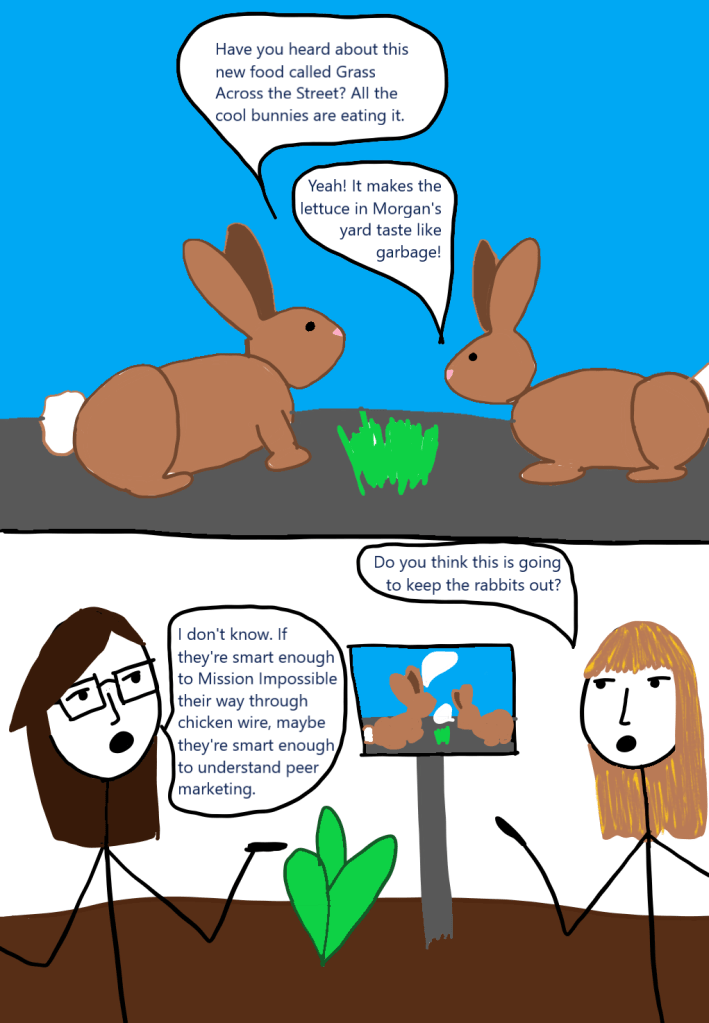
I lost steam around the chainsaw portion of step two. There was no way I could match Morgan’s commitment and tenacity. I assumed a position further down the food supply chain, finding ways to cook with the literal fruits of Morgan’s labor. I had some missteps – like when the Splendid Table told me that you can use green tomatoes instead of apples in any recipe. This led to a crisp that tasted sort of like ketchup-flavored pie filling with a cinnamon oat topping. Still, I was happy to have the opportunity to experiment. I knew that without Morgan, my life in Baltimore would have been significantly more brown.
Illinois (Zone 5)
My current Chicagoland apartment is my first home without a yard or an in-house gardener. A couple years after I moved here, a friend told me about a new community garden that was opening just a few blocks away from my place. “It seems like something you’d be into,” she said. “Yes,” I responded, “It does seem like that, doesn’t it?”
The community garden program – the Peterson Garden Project – was inspired by the Victory Gardens of WWII. It began in 2010, in an open lot that used to be an actual Victory Garden. Since then, the project has opened up five more gardens across the city. In a last attempt to live out my folksy, Mary Lennox fantasy, I signed up for a plot. I did my best to treat it well, but it turned out that even a six-minute bike ride tested my already weak resolve. I didn’t invest in the right equipment, didn’t plant the right things at the right times, and didn’t visit them enough. At the end of the summer I managed to bring a handful of tomatillos and basil home. I ate the few ripe cherry tomatoes straight off the vine. None of my peppers, radishes, cucumbers or zucchini got big enough to bear fruit before the first frost.
After that summer, the only plants left in my stead were two house plants that I brought back to Chicago from my dad’s funeral. I had neutral feelings about one of them – It was covered in fan-like clusters of leaves. When new ones sprouted, they opened up slowly like tiny hands. The other one, I actively hated. it had tough branches with fat leaves that grew at weird angles. It seemed strangely bald in the middle and heavier around the edges. I discovered that, while I hadn’t inherited my mother’s eye for landscaping, she did pass her resentment of houseplants down to me.
“They’re so needy,” she told me once. “All year round, you just have to keep feeding them.”
“…Like your children?” I asked.
“Well yes,” she said, “but I enjoy my children.”
When I asked her why she didn’t get rid of her houseplants then, she just shrugged. Likewise, I kept my ugly plants alive for five years despite the fact that I got nothing out of the relationship. Sometimes, I would go a full month without watering the extra ugly one. And yet, it persevered. Eventually, I developed a sort of grudging respect for it. I still didn’t like it, but its will to live was so strong that I felt it should be honored.
Then, a couple of years ago, I took in a foster cat who was suffering from a mysterious, debilitating illness. After several visits to the vet and an animal eye specialist (which, yes, is a thing that exists), he was diagnosed with a rare fungal infection. It’s most commonly found in dirt in the Mississippi river basin. However, a representative from the cat foster agency informed me that it can also be transferred through potting soil. She said the cat probably didn’t get the fungus from my houseplants, but I should get rid of them “just in case.”
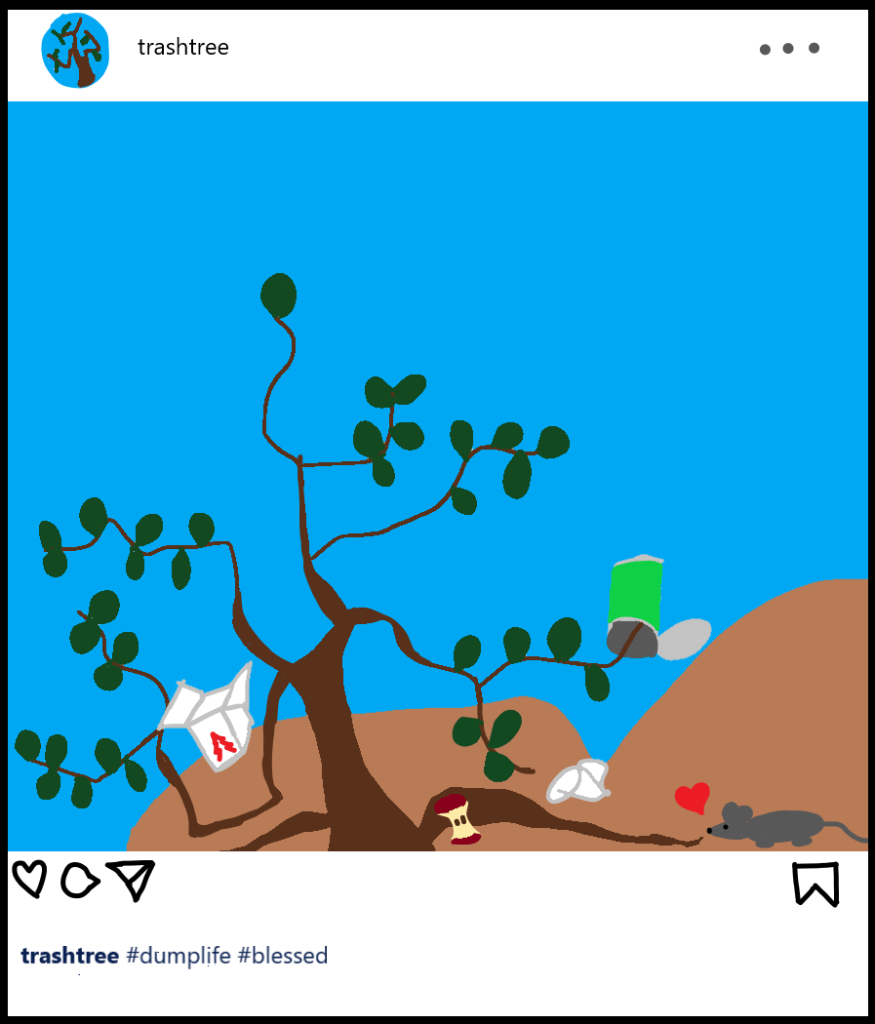
I called my mom and told her that my cat’s social worker wanted me to get rid of my funeral plants (#caitlinproblems). “It’s OK,” she said, “your dad would have hated those plants too.” So with her blessing, I said my goodbyes and gently placed them both in the dumpster. I’m assuming they died, but I also wouldn’t be surprised if they took root in a dump somewhere – especially the extra ugly one. I can just picture it growing free and wild among empty Cheeto bags and pad thai takeout containers in all its balding, misshapen glory.
For a while after that, I gave up on long-term plant relationships. I had a few short flings with pretty little ferns or Rosemary bushes that I picked up from grocery stores. (And by “flings,” I mean that I brought them into my home and immediately forgot to water them forever.) Lately though, I’ve been doing better with plant care. I currently have three small plants that I’ve managed to keep alive since the beginning of February. I’m much more attentive to their needs now that they’re my only living coworkers. I also have a small succulent that loses one leaf a week, like clockwork. It’s either shedding to spite me or, when the last leaf falls, a curse will become permanent. I haven’t figured out which one it is yet, but I’ll keep you posted!
I don’t have a natural aptitude for making things grow. But that’s fine. Things are still sprouting all around me without my help. I’ve seen wild plants taking advantage of the decreased foot traffic in some public spaces. Tall grasses are poking up from the mulch under playground monkey bars, and patches of clover are bubbling through cracks in basketball blacktops.
I’ve seen my community grow in unexpected directions too. In my neighborhood, there are cheesy messages chalked onto the sidewalk, rainbow murals on the insides of windows, cardboard boxes full of books and canned goods set out on sidewalks with notes that say “take what you need.” There’s one tree with poems, glued onto foam boards, strung under its branches. A sign on its trunk says, “Poe-Tree.” Even though everyone is insulated by their cool, dark homes, they can’t help but reach a few tender shoots toward the sun.
Maybe if I was good at planting things “inch by inch” and “row by row”, I’d feel differently about all this unruly growth – or at least I’d have to pick a different metaphor. But I’m not a gardener. So, I’m happy to root for the weeds.
That’s not to say that I think everyone should give up on gardening – I’m just going to leave it to the experts. And I’m going to support them however I can. I’ve gotten a couple boxes of local produce from a CSA farm called Urban Canopy here in Chicago. On the next page, there’s a recipe for a minestrone that allowed me to properly celebrate some of those vegetables. You can make it with whatever you got in your produce box, or from your garden, or on sale at Aldi. And – bonus! – it can also help clean out the miscellaneous meat drawer in the freezer.


Love it. I know just how you feel.
LikeLike