Skip to recipe for curried lentil stew with potatoes and carrots
Hey team. Things are pretty terrible right now, and they just keep getting worse, huh? Like many many other people (judging by the fact that the whole internet is out of yeast and flour) I have been spending a lot of time in the kitchen lately. Also like many others, I am hungry for ways to connect to the world outside my apartment. So from now until at least whenever the shelter in place order is lifted in Illinois, I’m going to post something in this space every Monday. These posts probably won’t be as long or polished or, well, good as I would like. But they will be something I can keep doing and a way I can keep sharing. Hopefully, if you’re reading this, there will be some ideas you can use or some dumb drawings that make you smile. Also, I would love to see what you are baking (and hear about your kitchen fails) as well!
Anyway, on to the dumb drawings!
Every once in a while, someone will ask me to recommend a good cookbook for a beginner cook – a kid going off to college, or moving into their first apartment. Then I’ll say something like, “Oh, I’m glad you asked since I for sure know what the youths of today are into! If you want something edgy, I know of a book with a totally sick technique for roasting duck.”
Then the person who asked will be like, “Um…I was thinking of something with maybe some microwave recipes and pictures from the internet?”
Realistically, I know people ask me about cookbooks because I like to cook, not because I have my finger on the pulse of Gen Z. They are probably hoping I can recommend something from personal experience. Unfortunately, I can’t. There are a few cookbooks that meant a lot to me when I was just starting out in the kitchen, but most of them are gleefully impractical. They didn’t exactly take me in a straight line from novice to intermediate cook.
Still, they were there for me during a crucial, formative time. I wouldn’t be the cook I am today without them. And look at me now: I own my own Kitchenaid mixer, and I can make meatballs that are, according to some, “better than Costco’s.” Maybe it’s time to give these books their due.
So, here it is – the list that literally twos of people have asked me for. These are the books that taught me how to cook.
The Early Years: Alpha-Baking and the Magic Spoon Cookbook
I don’t know when I got interested in cooking. I was in the kitchen “helping” my mom with cookies and quick breads before I was old enough to see over the counter without a stool. But I do remember the first time I cooked a meal on my own. One day, when I was 10 or so, I asked my mom if she could make chili for dinner. She said, “You can make chili for dinner.”
And I thought, “I…can?”
Of course my mother – the radioactive spider to my Peter Parker – does not remember this. It was a seminal moment for me though. I wasn’t allowed to go down the figurine aisle in the Hallmark store with my hands out of my pockets, and here my mom was offering me full access to knives, burners and raw beef. Frankly, I wasn’t sure I was ready for that kind of power. But my mom said I was, so I took her word for it. I chopped the peppers and onions, browned the hamburger, simmered the soup and served it – all without injuring myself or poisoning my family. And a whole new world of culinary possibility opened up to me.
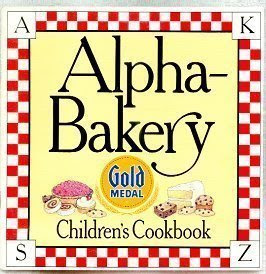
My parents kept their most of their cookbooks in cupboards above the stove. Once I realized I could decide for myself what I wanted to cook next, I started regularly crawling onto the counter by the fridge and pulling down armloads of them. My favorite was the Alpha-Bakery Gold Medal Children’s Cookbook. It was a flimsy, checkered booklet that, I think, my mom ordered it off the back of a box of Cheerios. There was a recipe for every letter of the alphabet. A was for apple crisp, B was for banana bread and so on. The illustrations ranged from sweet to surreal. The “F is for Fudge Brownies” page had a picture of a pile of normal, inert brownies on it. A few pages later, the “Q is for “Quick Cheesburger pie” recipe had a picture of a row of smiling cheeseburgers with arms, legs and sneakers floating through the hole in a giant Q. One of them was actually licking his lips on its way to – presumably – eat a pie flavored with the essence his friends and neighbors. None of that bothered me as a child, though. I trusted those cheeseburgers.
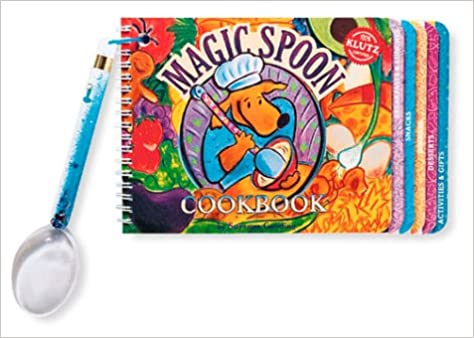
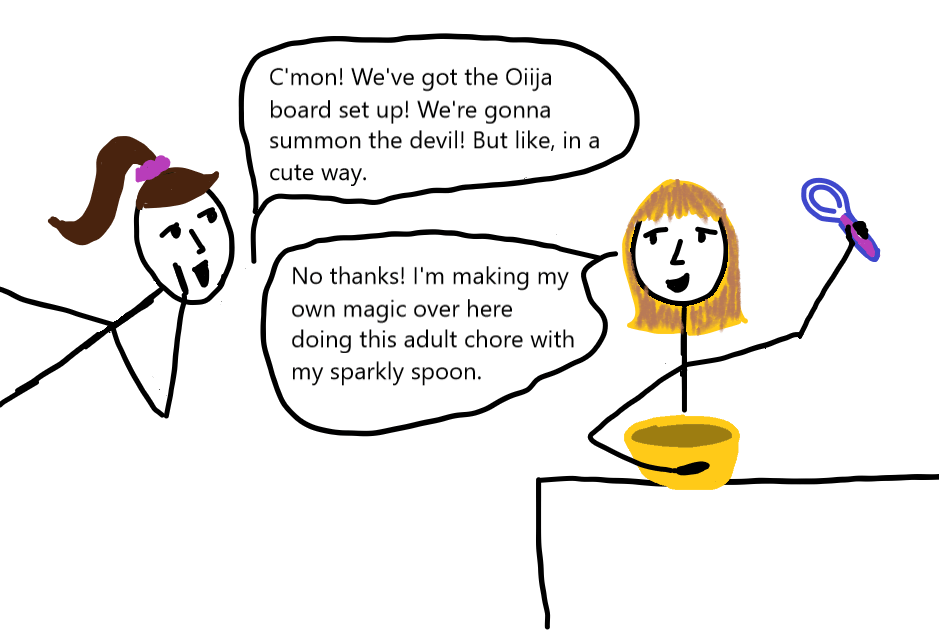
After Alpha-Bakery came the Magic Spoon Cookbook: A colorful, spiral-bound book with a dog in a chef’s hat on the cover, published by the Klutz company. It came with a plastic spoon that had purple stars and blue sparkles sloshing around in the handle. I turned to the Magic Spoon most frequently in my middle school years. I brought it with me to hangouts and sleepovers so I could suggest brownie-baking as a wholesome alternative to truth or dare.
College Part I: The Cake Mix Doctor and Birthday Cakes for Kids
Eventually I graduated from my kids cookbooks and into the more adult end of my mom’s collection. By the time I was in high school, I could execute many casseroles that promised to allow me to put in a full day at the office and still have dinner on the table for the kids by six. That skill set wasn’t particularly useful in college though. The dining hall eliminated the need for casseroles, and there wasn’t room in my dorm for a full set of pantry staples. But it wasn’t like I was about to start going to regular parties for fun – so I relied on recipes that didn’t quite start from scratch.
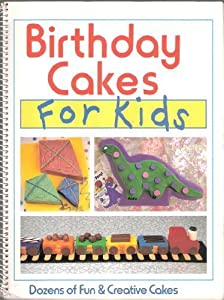
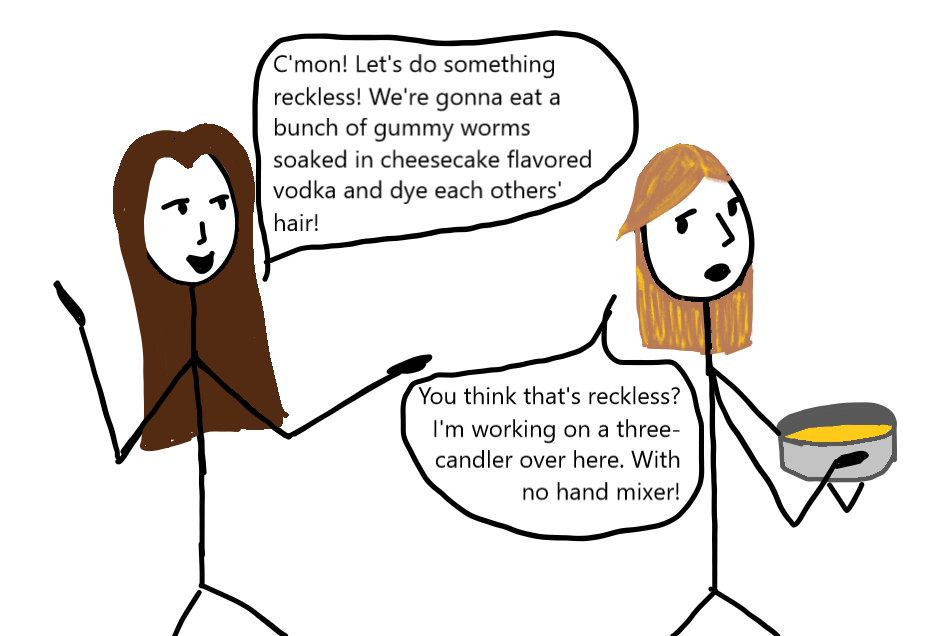
The Cake Mix Doctor cookbook featured recipes that turned boxes of cake mix into cookies, bars and other, slightly better cakes. I took Birthday Cakes for Kids with me as a sort of security item from home. It contained instructions for building princess castles, dinosaurs and train cars out of cake. It had a few recipes for cake from scratch, but said that cake from a boxed mix worked just as well. The book measured difficulty with a candle-based system. One-candle cakes were the easiest and three-candle cakes were the hardest. I treasured the memory of the two-candle castle cake my mom made for one birthday, complete with sugar-cone turrets and a Nutty Bar drawbridge.
College is a time when a lot of kids take dumb risks. Without parents around to set boundaries for them, they push the limits of their own health and safety. My version of this was deciding, one Friday night, that me and my freshman roommate should monopolize the dorm’s kitchen for several hours to make the jet cake from Cakes for Kids. I kind of remember her wanting to watch Top Gun and me suggesting we turn it into a theme night. But maybe I just wanted to do something dangerous.
College Part II: Ina and the rest of the Food Network Royal Court
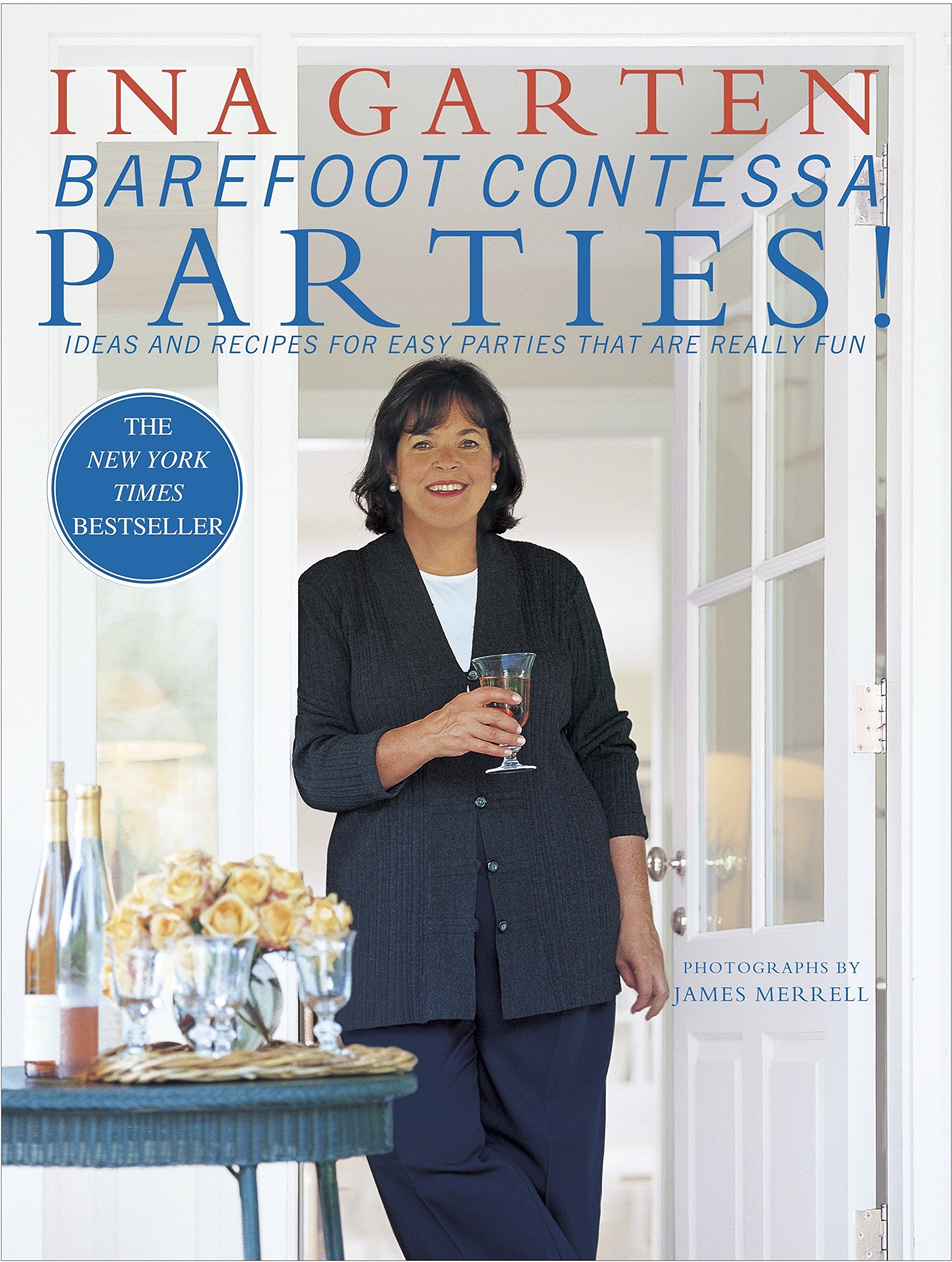
When I was a junior in college, me and my best friend Anne scored regular gig cooking meals for a Christian fellowship group. Every week, we planned and executed a menu to feed a group of our peers. So I skipped over learning how to make practical, substantive meals and went straight to the art of entertaining. And from my 20-year-old perspective, no one seemed more qualified to guide me than Ina Garten. Everything about her – her warm, smile; the fact that she wore pearls while making breakfast; her casual insistence that I buy a bottle of olive oil that cost more than my bio textbook – convinced me she was a paragon of hostessing.
It’s cheating a little to say that Ina was part of my cookbook library, since I found most of her recipes online. But I treasured the pages I printed off of FoodNetwork.com as much as the ones I found in Alpha-Bakery back in the day. Ina was probably the chef I trusted the most, though I also used recipes from Tyler Florence, Martha Stewart and Alton Brown – any TV chefs who looked like they might tell me that store-bought mayonnaise is fine “in a pinch.”
By day I ate like the young adult with the underdeveloped frontal lobe that I was – spreading peanut butter around sides of Styrofoam cups and then filling them with chocolate soft-serve; smuggling Ziploc bags of Lucky Charms back to my room to eat at while writing reports at 2 am; mixing the white sauce and the red sauce at the pasta bar to make Pepto-colored fettuccine. By night, Anne and I cooked like housewives whose husband’s investment banker bosses were coming for dinner. We made decadent classics like French onion soup and Ina Garten’s chicken with butter sauce – a recipe that called for capers and about a stick of butter per dinner guest.
Looking back, it’s possible that having access to that club credit card every week was too much power for me at such a young age. We pushed the limits of our weekly budget further and further as time went on. One week, we spotted a cross-promotion between a dairy company and Disney on Ice. If you spent enough money on cheese, butter, milk and sour cream at Kroger, you could get discounted tickets to the Princess show in Columbus. That week, we made mac and cheese for 30.
Guys, is that what embezzling is? Because I think might have been a student embezzler.

College Part III: The Really Useful Ultimate Student Cookbook
The second semester of my junior year, I left Ohio to study abroad in Cork, Ireland. I lived in an flat off campus with two other Irish students. We shared a kitchen with an electric stove, a full-size fridge and plastic counter tops. I didn’t have access to my mom’s pantry or an unlimited dining hall meal plan. So, for the first time, I had to cook for sustenance instead of entertainment. I was also trying to navigate a new measuring system and grocery stores organized around an entirely different set of values. (I was raised to believe that affordable chocolate chips and Dorito bags the size of window AC units are at the bedrock of free society. Turns out, people in other nations have other priorities!) Suddenly, I felt a little lost in the kitchen.
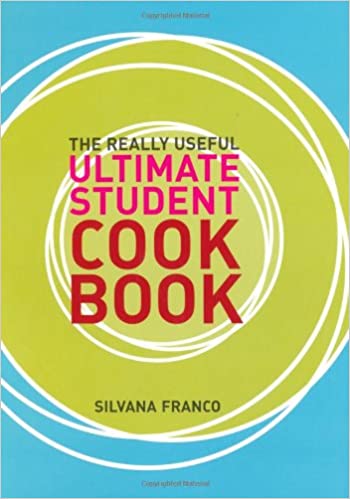
One of my first weekends in Cork, I bought a bright blue and green cookbook called The Really Useful Ultimate Student Cookbook. The book was full of affordable recipes for one or two people that it promised were suitable for “complete beginners.” It guided me through some adult basics like beef stew, mushroom fritatta and chickpea curry. It gave me some staples for entertaining a few of my friends, like fry-bread pizzas, hummus and jambalaya. It also gave me some ideas for unholy, eat-in-my-room-alone-while-bingeing-Buffy-at-midnight meals – like a macaroni and cheese sandwich, dipped in an egg batter and fried.
Since then, my cookbook collection has grown. I have books from my travels, books from church fellowship halls, books written by judges on cooking shows, books with 20 different variations on buttercream frosting and one book that has instructions for how to make a cookies shaped like Daleks from Doctor Who. I flip through them whenever I’m looking for inspiration or I want to try a new technique. But I also keep returning to my old favorites. The Ultimate Student Cookbook has made it all the way to Chicago with me – cracked spine, grease-stained pages and all. I pull it off the shelf at least a few times every winter. Because no matter how advanced my cooking skills get, there will always be times when I need to figure out how to feed myself with a jar of peanut butter and a bag of carrots shriveling into jerky in the back of my fridge.
In the end, here is my unhelpful advice about cookbooks for beginners: The best cookbooks are the ones you use. There isn’t a one-size-fits-all, but there is something for everyone. Whether you want to make meatloaf just like mom’s, or a cake that looks a pizza, or it’s week two of shelter-in-place during a global pandemic and you realize there is literally no better time to take up cheese-making, there is a text that will speak to you. I am, of course, available to give recommendations if you let me know what you’re into. Really though, the goal is to find the book that gets you in the kitchen and gets you through the week.
If it happens that the thing that’s going to get you through this week is a cozy, spicy vegetable stew made with fairly common pantry ingredients, there’s a recipe for you on the next page. It’s adapted from the Ultimate Student Cookbook because students have been cooking like they’re in quarantine for decades.
 Sprinkle Fix
Are you really making cheese?!?! I’ve wanted to try it for forever, but find it incredibly intimidating!
LikeLiked by 1 person
I will happily taste test any homemade cheese attempts mailed to my home.
LikeLike
Not yet! I have made ricotta and cream cheese in past, non-pandemic times and that was a little time consuming but very delicious. I think my next step is making paneer – I’m not quite ready to make the leap into Mozzarella. That seems like more of a “week 6 of self isolation” kind of a project.
LikeLike
I accept your improv challenge and try the lentil stew. I think I can pull it off without risking my life by going to the store.
LikeLike
Teenage Christa shared your fear of ouiji boards and truth or dare! I didn’t have a sparkly spoon though, that was genius.
LikeLike
MUFFIN FACE I FEEL SO APPRECIATED!!! But I fear I must correct you — that chicken piccata was a Paula Deen recipe. Remember that horrible feeling every time we realized the recipe called for ANOTHER stick of butter to be stirred into the sauce? “It’s going to break,” we said, with wide, horrified eyes, “It can’t take anymore butter, it can’t!!!” But it did. And no one but the football players could stomach it, as I recall. #GoodTimes #ActuallyBestTimes
LikeLiked by 1 person
😍👍
LikeLike