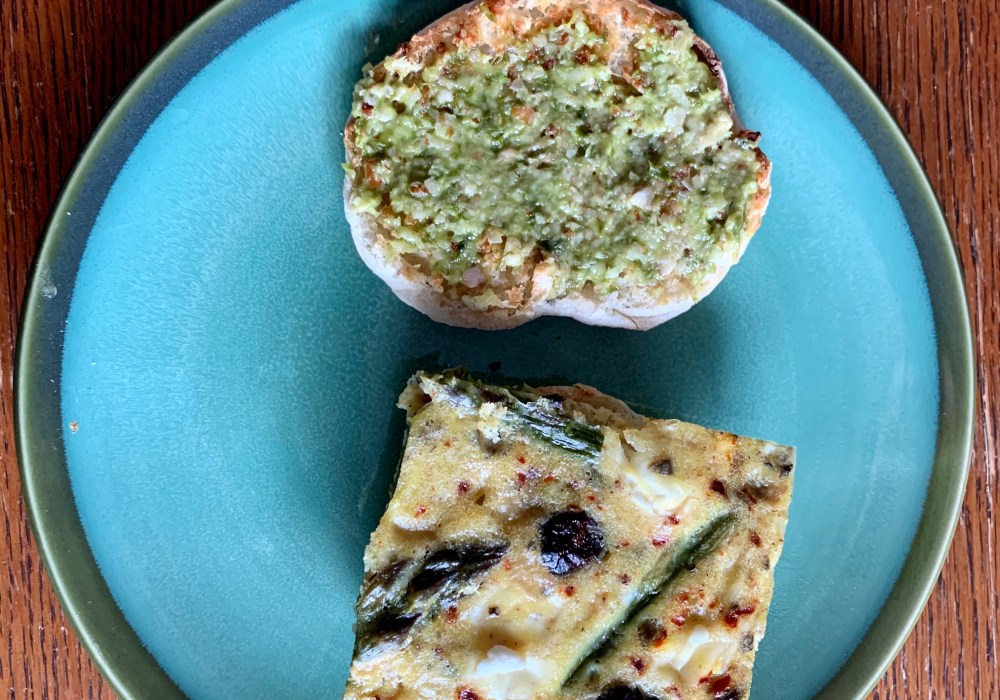
Zucchini: A Triptych

Jump to recipe for zucchini butter, tomato and cheese melt

Even though I’m not a student anymore, I still think of fall as back-to-school season. I live close to a major university, so thousands of students return to my city every August. At first, after I finished grad school, I didn’t envy them. I’d see undergrads picking out study snacks at Trader Joes and I’d think, “Aw, enjoy your close-reads of Kipling tonight you adorable nerds. I’m going to drink pumpkin-spiced wine and watch James Van Der Beek do a cha cha in an iridescent shirt unbuttoned to his navel on Dancing With the Stars. I’m a full Master of Fine Arts, so I earned it.”

But this fall, for the first time since I graduated, I’ve felt some nostalgia for my classroom days. It’s partly due to general nostalgia overdrive. I’m missing a lot of weird things right now, like public water fountains and condiment bars and the one Zumba instructor at my gym who always asked if we were “feelin’ sexy.” But, I also miss school because I’ve been reading and writing more lately — and I wish I had classmates to share it with.

Read More
Mad Science

Jump to recipe for rhubarb custard popsicles

For a long time, I thought my lab career had peaked in the seventh grade. My science project that year was entitled, “What is the Most Important Ingredient in a Cake?” I baked Betty Crocker’s yellow cake recipe ten times – each time omitting a different ingredient. I evaluated the finished cakes with a rubric that included height, color, texture and taste.

It wasn’t my highest-scoring science project. Late the night before it was due, I covered my tri-fold board with jagged, multi-colored fans of construction paper and bubble letters. I hoped it would come off as “whimsical,” but the judges called it “sloppy.” Also, they weren’t impressed that I had only done the experiment once. Apparently, the Doc Brown method wasn’t good enough for the high schoolers who got extra credit for evaluating my middle school science fair. But, it was the most relevant that “science” had ever seemed to me. Through my process, I learned that vanilla and salt are purely for taste, baking soda and eggs are for leavening, and sugar is what keeps cake from tasting like Ramen noodles. To this day, whenever I have to substitute an ingredient in a baked good, I think back to that experiment.

Read More

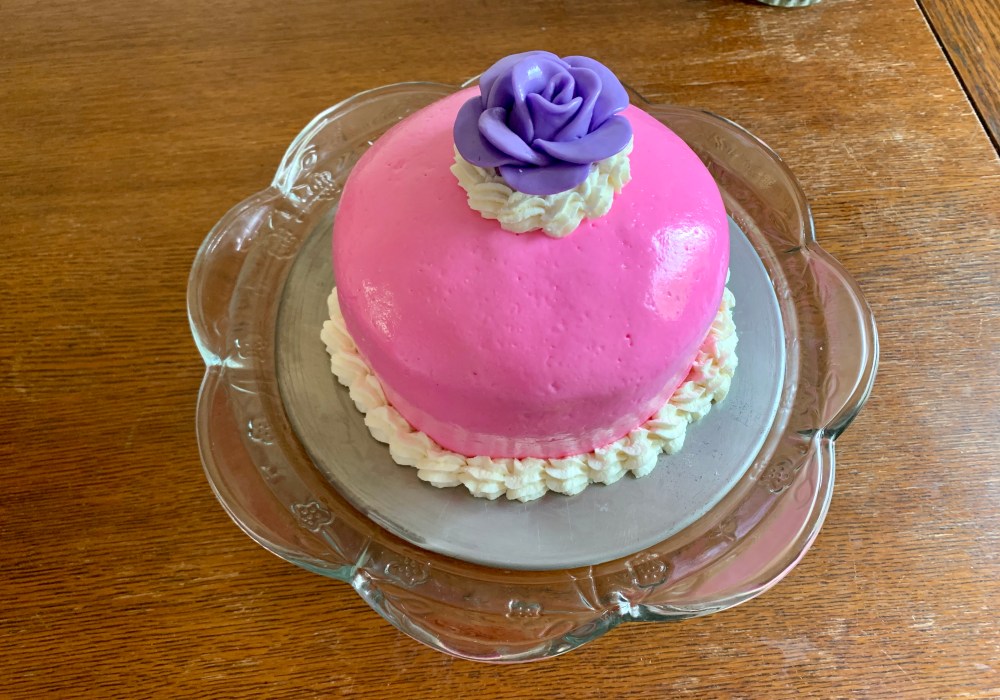
The Adventures of Cakegirl

In a world where straight dudes are sincerely jazzed about lady-soccer; where Taco Bell is pretending to be woke; where all purpose flour is outselling crude oil – a world where chaos reigns – the people need a hero. They need someone steady and true, who can deliver the medicine they so desperately need:

Intermediate amateur-made layer cakes.

Read More

Ballad of a Black Thumb

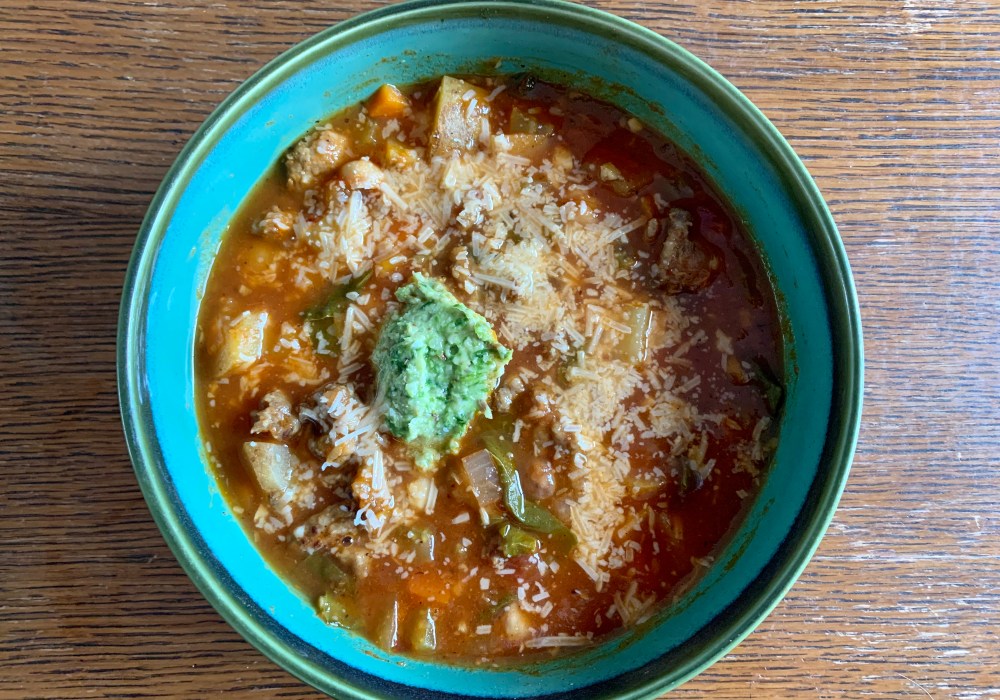
Skip to the recipe for produce box minestrone

I’ve always wanted to want to garden. When I was little, one of my favorite songs was the “Garden Song.” I think I first heard it on a children’s tape, but the most popular version was recorded by John Denver. The first lines are, “Inch by inch, row by row, gonna make this garden grow. All you need is a rake and a hoe and a piece of fertile ground.” The song – considered a “folk standard” – was written by David Mallet. Apparently, it came to him one day in his 20’s as he worked in his father’s garden. He describes the tune dropping into his head with the same sort of ease that fruits and flowers spring from the ground in the lyrics. As a ten-year-old, I ranked it somewhere between “At the Ballet” from Chorus Line and “Hands” by Jewel as one of the most beautiful songs ever written.

Unfortunately, it is also full of lies.

Read More

Life on Ice

Or: How to organize your freezer the Sprinkle Fix way

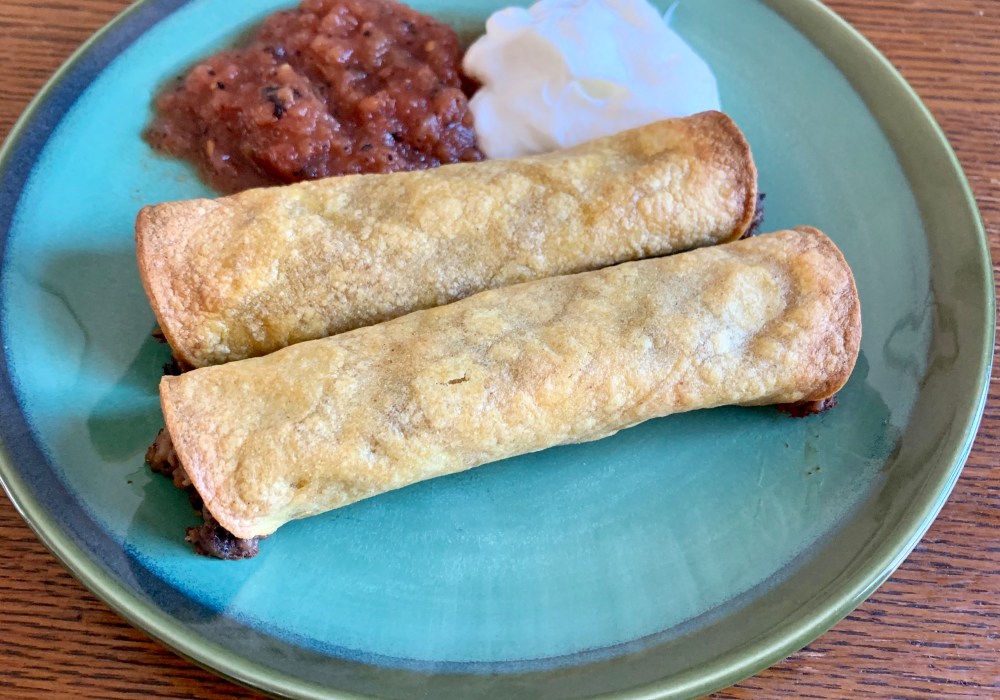
Jump to recipe for black bean and chorizo taquitos

One of quarantine’s hottest trends – along with fostering dogs, baking bread and depicting the likeness of Joe Exotic out of dried beans and macaroni – is organizing. People are using this overabundance of inside-time to optimize their entire living spaces – but of course, I’m especially interested in the kitchens. Some of my favorite food authorities have recently written about how they stock and organize their pantries and fridges. They usually say at the top that they’re doing it because they’ve gotten lots of requests from readers who want to look inside their cupboards. Which makes sense. We’re all spending more time in our kitchens and taking fewer trips to the grocery store. So, we want ideas about how to store food more efficiently. I’m not sure these pantry show-and-tell posts can help though. They are full rainbows of legumes in Weck Jars; fully alphabetized spice racks; freezers packed with Tetris-like precision. They look like all the other stuff these food celebrities post – completely beautiful, and completely unattainable for normal people.

Read More

A Study in Starches

Sociological lessons from a church cookbook

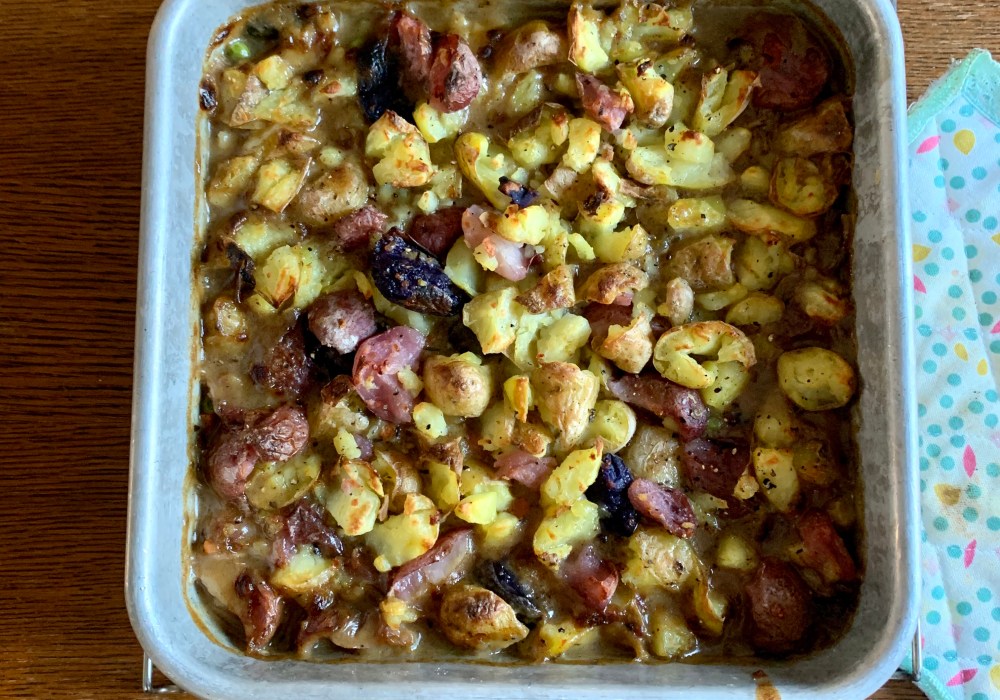
Jump to recipe for chicken potato casserole

Of all my cookbooks, only one is falling apart from overuse: My childhood church’s cookbook. The comb binding is bent and letting the pages escape. The back cover has been gone for years. The page with my family’s go-to chocolate chip cookie recipe – marked with a yellow Post-it sometime in the 90’s – is almost translucent with grease stains. I borrowed it from my mom shortly after I moved to Chicago and promised I’d return it to her soon…about seven years ago.

I haven’t cooked from it much as an adult, but I like to have it in my collection. It is the purest artifact I have from the place where I grew up. Sometimes I pull it out just to prove to myself that no, I have not been exaggerating the importance of mayonnaise in my native culture. (In the cookbook it is used as a spread, binding agent or source of fat in salads, main courses, desserts and every kind of appetizer: dips, bites AND balls).

Read More

Deep-Seated Dumpling Issues

Jump to the recipe for butternut squash pierogies

For a long time, I thought pierogies and I were fated to be together – That something in my blood calls out to this sacred food of my motherland. That’s been my go-to explanation for why I keep finding myself with a rolling pin in my hand and mashed russets in my hair at 2 a.m., swearing I will never do this to myself again. But the pierogies know I’m bluffing. The following year, in the thick of winter, I will hear their siren song again and I will begin the cycle anew. It’s like Hades and Persephone – you know, if Persephone was a Midwestern lady with a thing for sparkly eyeshadow, and Hades was a hot ball of dough and cheese.

Or at least, that’s how I’ve framed it in the past. Pierogies have a unique place in my heart, but I’ve come to realize that fate doesn’t have much to do with it. The truth is a little more complicated and a lot less interesting. If you don’t think that sounds like compelling blog material, you’re probably right. But what choice do we have? We’re in the middle of a pandemic and I know for a fact that you blazed through all of Love is Blind weeks ago. So, grab a bowl of your favorite beige food and get comfortable. It’s time to get to the root of my dumpling issues.

Read More

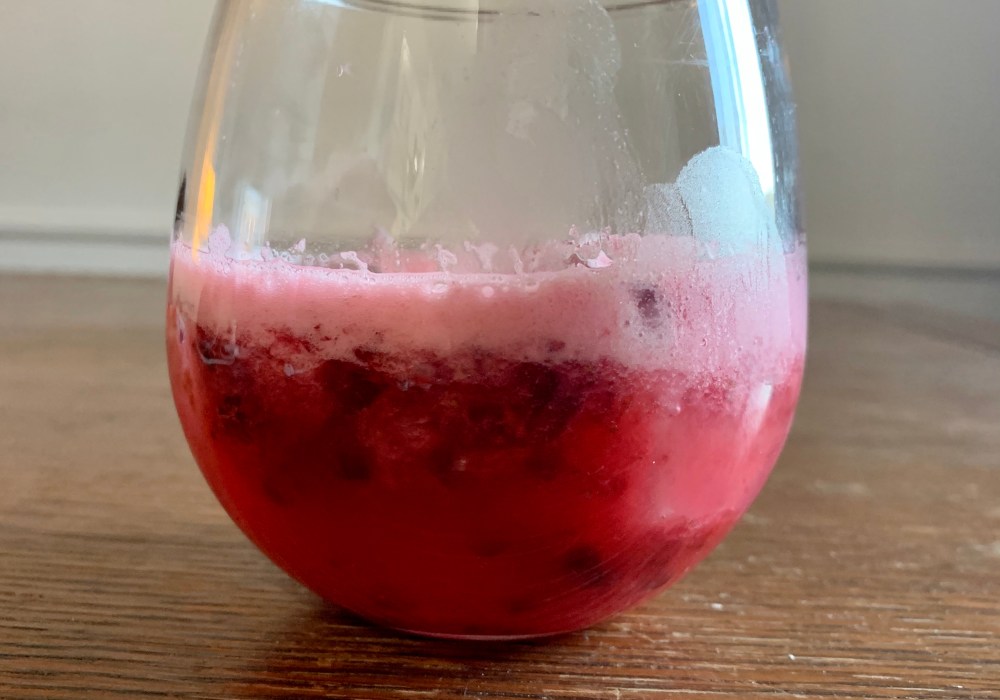
Party Like It’s February, 2020

Jump to recipe for spring berry fizz

Back in the social gathering age – you know, the halcyon days of six weeks ago – I used to enjoy theme parties. It’s fun to get dressed up, eat cleverly-named food and play a grownup game of make-believe for a while. Of course, a theme party is never a totally immersive experience. Most are more about nostalgia than they are about authenticity or nuance. Last time I went to Medieval Times, I didn’t get into it with my serving wench about the rampant urban unrest that led to the 1323 peasant revolt in Flanders. I was too busy stuffing my face with rotisserie chicken and rooting for the red knight to pull off the winning horse dance moves.

But that’s the appeal of the theme party – it’s a chance for an escape.

Read More

The Sourdough Diaries: Volume I

I’ve always romanticized bread baking. The process has been handed down through generations of prairie women. My mother taught me how to knead dough by hand when I was little, the same way her mother taught her: fold, shove, quarter turn, repeat. The first time I decided to make bread on my own as a young adult, I pictured myself with my nose adorably smudged with flour, filling my home with the smell of fresh bread and the pride of my ancestors.

In reality, I ended up slumped over the counter with flour smeared in many non-cute places. And I knew that if my ancestors could see my misshapen handiwork they’d be like, “I don’t know her.”

Read More